Claude Fable 5 vs. GPT-5.5 vs. Gemini 3.1 Pro: Which Should You Choose? A Deep Dive into Performance, Pricing, and Use Cases [July 2026]
A thorough comparison of the latest flagship models from the industry's three leading AI labs, all released in the first half of 2026: Claude Fable 5, GPT-5.5, and Gemini 3.1 Pro. Covers benchmark performance, API pricing, context windows, multimodal support, and how to use them on consumer plans like ChatGPT Plus, Claude Pro, and Google AI Pro — with recommendations by use case, based primarily on official data.
In the first half of 2026, the "big three" of the AI industry each rolled out their latest flagship models: Anthropic's Claude Fable 5 (GA on June 9), OpenAI's GPT-5.5 (released April 23), and Google's Gemini 3.1 Pro (preview launched February 19).
All three are billed as "the best model yet" from their respective makers, but pricing varies by as much as 5x, and each has clearly distinct strengths. This article compares the performance, pricing, and available products of all three models based primarily on official data, and breaks down which one to choose depending on your use case.
The information in this article is current as of July 2026. Benchmark scores are labeled to distinguish "officially reported values" from "third-party measurements." Because pricing and specs change quickly, always check each company's official page before signing up.
First, the lay of the land: where the "latest models" stand as of July 2026
Before comparing, let's map out where each company's model lineup currently stands. Releases have come thick and fast over the past six months, making it easy to confuse model names.
- Anthropic: The latest model is Claude Fable 5 (
claude-fable-5). Its sister model with identical specs, Claude Mythos 5, is limited to authorized organizations. It was temporarily taken offline on June 12 pending a review related to US export regulations, but resumed service on July 1 after the Commerce Department completed its review (official announcement). - OpenAI: In addition to GPT-5.5, released in April, OpenAI launched the next-generation GPT-5.6 series (Sol / Terra / Luna) on July 9. That said, GPT-5.5 Instant remains the default model within the ChatGPT product itself, so this article focuses primarily on GPT-5.5, for which more information is available, and treats GPT-5.6 as a supplementary note.
- Google: The latest in the Pro lineup is Gemini 3.1 Pro (
gemini-3.1-pro-preview), which is still in Preview status as of July 2026. Note that the Flash lineup has already moved on to versions 3.5 / 3.6, creating a generational gap between the two lines, and that "Ultra" is not a model name but the name of a subscription plan (Google AI Ultra). The extended-reasoning mode is offered to Ultra subscribers as "Gemini 3.1 Deep Think."
Basic spec comparison
| Item | Claude Fable 5 | GPT-5.5 | Gemini 3.1 Pro |
|---|---|---|---|
| Developer | Anthropic | OpenAI | Google DeepMind |
| Release | June 9, 2026 | April 23, 2026 | February 19, 2026 (Preview) |
| Model ID | claude-fable-5 | gpt-5.5 | gemini-3.1-pro-preview |
| Context window | 1M tokens | ~1.05M tokens | Up to 1M tokens |
| Max output tokens | 128K | 128K | 64K |
| Knowledge cutoff | January 2026 | December 2025 | Not disclosed (unconfirmed) |
| Multimodal input | Text + image | Text + image | Text + image + audio + video |
| API price (input / 1M tokens) | $10.00 | $5.00 | $2.00 (over 200K tokens: $4.00) |
| API price (output / 1M tokens) | $50.00 | $30.00 | $12.00 (over 200K tokens: $18.00) |
Sources: Anthropic official model list, OpenAI official model page, Gemini API official pricing, Gemini 3.1 Pro official model card
Three major differences stand out from the spec table.
- A price gap of up to 5x: At $12 per million output tokens for Gemini 3.1 Pro versus $50 for Fable 5, the difference compounds fast under heavy use.
- Only Gemini supports audio and video input: Of the three models, Gemini 3.1 Pro is the only one that officially supports audio and video as native input. For use cases like analyzing meeting recordings or YouTube videos directly, it's effectively the only option.
- Longer outputs favor Claude and GPT: Gemini 3.1 Pro's maximum output of 64K tokens is half that of the other two, putting it at a disadvantage for generating long code or documents in a single pass.
Coding and agentic performance comparison
This is the performance dimension engineers care about most. Because results vary heavily by test conditions, sources are noted separately for each figure.
| Benchmark | Claude Fable 5 | GPT-5.5 | Gemini 3.1 Pro |
|---|---|---|---|
| SWE-bench Verified | 95.0% (third-party measurement) | Not disclosed (previous-gen GPT-5 scored 74.9%) | 80.6% (official) |
| SWE-bench Pro | 80.3% (official, proprietary environment) | 58.6% (official figure per media reports) | 54.2% (official) |
| Terminal-Bench | 88.0% (v2.1, third-party aggregate) | 82.7% (v2.0, figure per media reports) | Not disclosed |
Reading between the caveats, a few things stand out:
- Fable 5's coding performance is a clear step ahead of the rest, an assessment that both official and third-party sources broadly agree on. That said, the 80.3% SWE-bench Pro figure is Anthropic's own self-reported measurement using its proprietary scaffolding, and it isn't a reproduced value from a neutral environment, so it should be taken with a grain of salt. The 95.0% SWE-bench Verified figure also comes from the independent leaderboard vals.ai.
- Gemini 3.1 Pro stands out for the transparency of its official figures: its 80.6% SWE-bench Verified score is explicitly stated in its model card.
- On OSWorld-family benchmarks that measure agentic PC operation, third-party measurements report 85.0% for Fable 5, 78.7% for GPT-5.5, and 64.7% for Gemini 3.1 Pro, but since these come from a single source, they should be treated as reference points only.
For real-world usability, it's more practical to also factor in "which development tools you can access each model from," covered later in this article.
Reasoning, knowledge, and multimodal performance comparison
| Benchmark | Claude Fable 5 | GPT-5.5 | Gemini 3.1 Pro |
|---|---|---|---|
| GPQA Diamond (graduate-level science) | ~92.6% (third-party aggregate) | ~93.5% (third-party aggregate) | 94.3% (official) |
| ARC-AGI-2 (abstract reasoning) | Not disclosed | Not disclosed | 77.1% (official, verified by ARC Prize) |
| MMMU / MMMU-Pro (multimodal understanding) | MMMU ~74.3% (third-party) | MMMU 88.3% (third-party) | MMMU-Pro 80.5% (official) |
| LMArena (user voting) | #1 (as of 2026/7/10) | #8 (GPT-5.6 series) | #10 |
- On official figures for science and abstract reasoning, Gemini 3.1 Pro is among the strongest. Its ARC-AGI-2 score of 77.1% in particular is a dramatic leap from the previous generation's 31.1%, and it has also passed third-party verification by ARC Prize.
- On the other hand, Fable 5 leads in actual user evaluations (LMArena), a classic case where benchmark scores and hands-on impressions diverge. Many users cite Fable 5's overall writing quality and instruction-following as reasons to prefer it.
- Anthropic publishes relatively few benchmark figures, tending instead toward qualitative claims like "state of the art across nearly every domain," so keep in mind that figures like GPQA above rely on third-party aggregation out of necessity.
API pricing and cost-effectiveness
Here we revisit API pricing per million tokens and compare available discount options.
| Claude Fable 5 | GPT-5.5 | Gemini 3.1 Pro | |
|---|---|---|---|
| Input | $10.00 | $5.00 | $2.00–4.00 |
| Output | $50.00 | $30.00 | $12.00–18.00 |
| Cached input | Available | $0.50 (1/10th) | $0.20–0.40 per read |
| Batch discount | Available | Available | ~50% off |
| Higher-tier / budget tier | Mythos 5 (invite-only, same price) | GPT-5.5 Pro ($30/$180) | Flash-Lite ($0.25/$1.50) |
Roughly speaking, for the same workload, API cost runs Gemini : GPT : Claude ≈ 1 : 2.5 : 4 (the exact ratio varies with your input/output mix).
- For high-volume processing where cost is the priority, Gemini 3.1 Pro (or the Flash lineup) has a clear edge
- Fable 5 is the most expensive of the three, but for use cases like "handing off multi-day autonomous agent work to replace human labor," evaluators say task-completion capability matters more than unit price
- GPT-5.5's $0.50 cached-input price is compelling, and for agentic use cases that repeatedly reuse the same context, this narrows the effective price gap with Gemini
Note that GPT-5.6, released July 9, comes in three tiers — Sol ($5/$30), Terra ($2.5/$15), and Luna ($1/$6) — with the mid-tier Terra landing in almost the same price bracket as Gemini 3.1 Pro. Price competition looks set to intensify further.
How to use them and pricing on consumer plans
Here's the comparison for using these models as chat apps rather than through the API.
| Claude | ChatGPT | Gemini | |
|---|---|---|---|
| Free plan | Available (excludes Fable 5) | Available (GPT-5.5 Instant) | Available |
| Standard paid plan | Pro, $20/month | Plus, $20/month | Google AI Pro, $19.99/month |
| Latest model on standard plan | Usage-based credits only | GPT-5.5 / 5.6 available | Gemini 3.1 Pro available |
| Higher-tier plan | Max, from $100/month (up to 50% of usage allowance on Fable 5) | Pro, $100–200/month | AI Ultra, from $99.99/month |
There's a somewhat unexpected catch here:
- On Claude Pro ($20), Fable 5 does not come as "unlimited" usage. It's excluded from the plan's usage allowance and is instead billed via pay-as-you-go credits at API-equivalent rates. If you want to use Fable 5 within a flat monthly fee, you need Max (from $100/month, up to 50% of the weekly usage allowance) (official FAQ).
- ChatGPT Plus ($20) and Google AI Pro ($19.99) both give you direct access to their latest models on the standard plan, making them solid value.
- Gemini 3.1 Deep Think (extended reasoning) is exclusive to Google AI Ultra.
Consumer plan structures and pricing change frequently, so treat the table above as a reference point current as of July 2026.
Relationship with development tools and agentic products
Which development tools you can access a model from — not just the model itself — has a direct bearing on real-world adoption decisions.
- Claude Fable 5 → Available as the top-tier model in Claude Code (part of a four-tier lineup alongside Opus 4.8, Sonnet 5, and Haiku 4.5). Optimized for long-running autonomous agent work.
- GPT-5.5 / 5.6 → Available through Codex and ChatGPT's Agent Mode. Simultaneous availability across the API and Codex is now standard.
- Gemini 3.1 Pro → Available through Gemini CLI, Google Antigravity, and Vertex AI. Note that Google is in the process of integrating Gemini CLI into Antigravity CLI, and going forward, Antigravity — the "agent-first IDE" — is set to become the primary focus.

So which should you choose? (Recommendations by use case)
- Serious coding and autonomous agent development → Claude Fable 5. Its dominant SWE-bench-family scores and tight integration with Claude Code are its strengths. It's also the most expensive of the three, so a realistic approach is to reserve it for demanding tasks while using Opus 4.8 or Sonnet 5 for everyday coding.
- High-volume API processing and multimodal analysis on a budget → Gemini 3.1 Pro. It's the cheapest of the three, and it's the only one that supports audio and video input — the obvious choice for video and meeting-recording analysis pipelines.
- A balanced choice, or if you're invested in the ChatGPT ecosystem → GPT-5.5 (/ 5.6). It sits in the middle on both performance and price, offering easy access to a flagship model for $20 via Plus, and strong effective cost-efficiency thanks to its cache discount.
- Want to try a flagship model for $20/month → ChatGPT Plus or Google AI Pro. Just keep in mind that on Claude Pro, Fable 5 isn't included in the flat-rate allowance by default.
Each of these three models is also covered in more detail on its own product page.


Conclusion
Summing up the state of the big three as of July 2026: Claude leads on coding and autonomous agents, Gemini leads on cost-efficiency and multimodal support, and GPT offers the best balance and ecosystem. Since every one of these models turns over within just a few months (GPT-5.6 has already arrived in July, for instance), the smartest approach for this era isn't to commit to one model, but to build a setup where you can switch between models depending on the task at hand.
We continue to update coverage of each model and each AI development tool on this site. Be sure to check out these related articles as well.
AI tools featured in this article
Related articles
What Jev Is [October 2026]: The AI That Generates No Text — How to Use It, Pricing, and How It Differs from Microsoft-Decision-1
On 9 October 2026, Microsoft released Microsoft-Decision-1, a decision model at the same price as Jev ($0.042 per million input tokens, free output) and with the same question types. This article explains what Jev — released by TypeSafe AI on 15 September 2026 — is: a System One model that generates no text and returns Choice (classification), Score (rating) and Noul (a 0–1 truth value) with probabilities; speculative fan-out, where stacking questions barely changes latency; how to get started from the waitlist to the Python SDK, HTTP API and Claude Code skill; routing low-confidence answers to people; and use cases. It then compares Jev with Microsoft-Decision-1 (access, context length, availability, Japanese support), explains which to choose and whether you can use them from Japan, and covers Jev's latest status in October (Series A, rate limits, OpenRouter listing). It also covers the official note that CJK accuracy is lower than English and the weak spots TypeSafe publishes itself.
![What Jev Is [October 2026]: The AI That Generates No Text — How to Use It, Pricing, and How It Differs from Microsoft-Decision-1](/_next/image?url=%2Fimages%2Farticles%2Fjev-typesafe-ai-guide.png&w=3840&q=75 "What Jev Is [October 2026]: The AI That Generates No Text — How to Use It, Pricing, and How It Differs from Microsoft-Decision-1")
What GPT-6 Astra Is [September 2026]: Which ChatGPT Plans Include It, API Pricing, and How to Split Work with GPT-5.6
GPT-6 Astra, announced by OpenAI on 3 September 2026 (US time), is a flagship tuned for computer use and long, multi-step work, true to the pitch that it "can do anything a person can do on a computer." It scores 72.6% on OSWorld 2.0, and time per task drops 47% from GPT-5.6 Sol's roughly 75 minutes to roughly 40. This article checks what changed against the benchmarks, then lays out where each ChatGPT plan can use it (Pro at ¥16,800 / ¥30,000, Business and Enterprise get "GPT-6 Pro" in Chat; Plus at ¥3,000 gets it through ChatGPT Work and Codex; Free and Go do not), the caps such as 50 or 200 messages a week, API pricing ($10 input / $50 output, 2.5x Sol) and how to split work with Sol, Terra and Luna, and the behaviour changes on switching (more clarifying questions, more sensitivity to skill files), based on OpenAI's announcement, Help Center and model page.
![What GPT-6 Astra Is [September 2026]: Which ChatGPT Plans Include It, API Pricing, and How to Split Work with GPT-5.6](/_next/image?url=%2Fimages%2Farticles%2Fgpt-6-astra-guide.png&w=3840&q=75 "What GPT-6 Astra Is [September 2026]: Which ChatGPT Plans Include It, API Pricing, and How to Split Work with GPT-5.6")
What Is Cloudflare OS? A Deep Dive into the Open-Source AI Agent Workspace (Architecture, Gatekeepers, Self-Hosting, Pricing)
Cloudflare open-sourced Cloudflare OS, an AI agent workspace, on August 5, 2026. This article covers its zero-permission Gatekeeper security, model selection and cost control via AI Gateway, Gadgets (small personal apps), how to deploy it into your own Cloudflare account, and pricing — based on the official blog and GitHub.
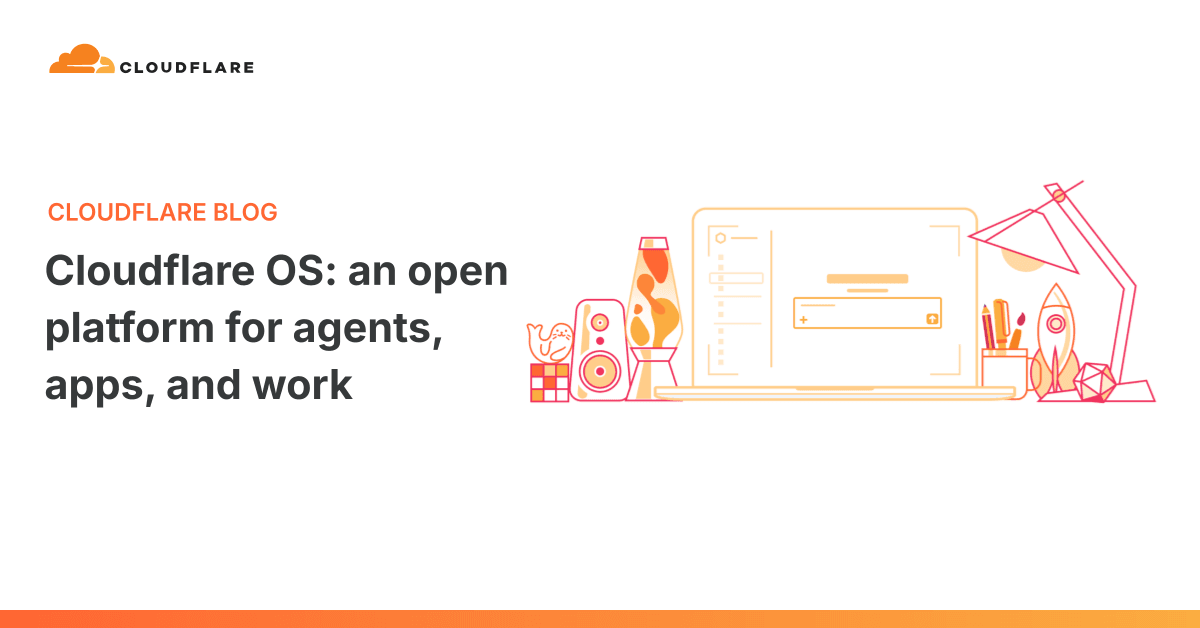
How to Use Sakana AI Fugu: From API Key to Claude Code | Pricing, Free Tier, and Performance
A guide to Sakana AI's multi-agent platform Fugu: issuing an API key at console.sakana.ai, calling the OpenAI-compatible API, and wiring it into Codex and Claude Code. Covers choosing between Fugu, Fugu Ultra, and Fugu Cyber, pricing and whether a free tier exists, and benchmark performance.